Elizabeth A.
03/18/2026
I have been applying AxonRelief twice daily for about seven weeks. I am...

How thousands of women over 60 like me are quietly reversing years of "paper-thin" skin and stubborn purple bruising – not by hiding, but by strengthening.

My arms looked like a battlefield.
That’s the only way I can describe it.
The dark purple splotches.
The paper-thin texture.
That sinking feeling of embarrassment the moment I caught someone staring at my forearms in the grocery store.
I used to dread summer.
Not the heat, not the humidity… just the short sleeves.
Going to the beach.
Gardening in the sun.
My skin was so fragile that the slightest bump against a kitchen counter or a doorknob could leave a dark purple bruise that stayed for weeks.
Sometimes I couldn't even remember what I'd bumped into.
I tried everything:
Arnica gels from the drugstore…
Vitamin K supplements…
Long-sleeve "cooling" shirts…
Nothing helped. I spent hundreds of dollars on "miracle" lotions and stopped counting somewhere along the way.
I’d made my peace with it. This was just what aging looked like.
Then a lady I know called Linda said something over tea that I nearly took offense to.
(I’ll come back to Linda. What she said irritated me at first. Took me a few days to actually think about it properly.)

Let me tell you what five years of trying to fix this actually looked like.
Three different "dermatologist-recommended" moisturizers. About $45 each.
The first one was so greasy it ruined my favorite silk blouse.
The second did absolutely nothing for the bruising—it just made my skin feel wet.
The third was so full of chemicals it gave me a rash I didn't have before.
I even tried those thick, "medical-grade" sleeves.
They helped hide the marks…
But they were hot, itchy, and made me feel like a patient instead of a person.
Here’s what nobody tells you when you’re going through all that:
I kept getting worse.
Slowly. Quietly. My skin just felt a little more like tissue paper every few months.
The purple bruises kept appearing so easily that I started paying more attention to just how fragile my skin had become. I later learned that some forms of easy bruising in older adults can be associated with a condition called senile purpura — but whatever the reason, I just wanted my skin to stop looking so bruised and fragile.
More mornings spent carefully applying concealer to my arms before I could leave the house—standing at the bathroom mirror, dabbing away the purple marks, waiting for the makeup to dry.
More social invitations that got quietly declined because I didn't want to explain why I was covered in bruises again.
Then Linda said what she said.

Linda had her own bruising problems a couple of years back.
I hadn’t really asked how she’d sorted them out, but I’d noticed she’d started wearing sleeveless dresses again.
We were having tea and I mentioned my arms were looking particularly "beat up" that week.
She nodded and said:
"Have you ever thought the lotions you're using are just masking the problem while your skin keeps thinning? When your skin gets this fragile, even the smallest bumps can leave a bruise."
I gave her the look you’d expect.
She said to have a look at something, and sent me a link later that day.
I left it sitting in my inbox for four days without opening it.
But the question stuck around.
Because here’s the thing about five years of fragile skin and a cabinet full of creams that didn't work – at some point you start doing your own analysis.
And mine didn’t add up.
My skin felt more fragile after using "heavy-duty" moisturizers, not less.
The concealer was just a temporary mask that washed off at night.
Every "remedy" treated the bruise after it happened, but nothing stopped the next one from appearing.
Another purple bruise. Another mark. Another reminder of how easily my skin seemed to bruise.
And somewhere along the way, I had come across the term senile purpura — a condition associated with easy bruising in older, fragile skin. But whether that was the explanation for my own bruises or not, the problem was the same: my skin was becoming incredibly easy to mark.
So I opened the link.

Your skin is not a static thing that just "wears out" because of a birthday.
It’s a living organ. It has layers. It has a structural "cushion" of collagen and fatty tissue that helps protect the delicate structures underneath.
It was built – over a very long time – to be resilient, to stretch, and to protect you from the world.
But as we age, and sometimes as a result of certain medications or other factors, those protective layers can gradually change.
When you just put a standard moisturizer on top, you don't address those deeper changes.
You just hydrate the very surface.
Think about it this way.
If you have a crumbling brick wall, painting it won't stop it from becoming weaker. You need to support what’s underneath.
That’s what can happen to our skin over time.
The "cushion" becomes thinner: the structural support beneath the skin can gradually decrease.
The delicate blood vessels have less protection: with less cushioning underneath, small vessels near the surface can become easier to damage from everyday bumps.
The skin barrier weakens: skin can become thinner, more delicate, and more prone to marks, tears, and bruising.
And when a bruise appeared from all of that, the answer was always "more arnica"...
More concealer...
More paint on a crumbling wall...
I sat there and thought about my "medical" lotions that did nothing for the fragile feeling.
About the embarrassment that disappeared only when I hid under long sleeves.
About how my skin felt worse after years of "care" than it did a decade ago.
I later learned that this kind of easy bruising in older, fragile skin can sometimes be associated with a condition called senile purpura.
But the name didn't change what I was dealing with every day.
My skin was thinner.
It was more delicate.
And the smallest bumps could leave behind another purple mark.
It wasn’t that nothing worked.
It was that everything I had tried seemed to focus on the bruise after it appeared, rather than caring for the fragile skin underneath.

I want to be upfront about what I thought I was going to find when I finally opened Linda’s link.
Another product…
Another promise…
Another thing for the cabinet.
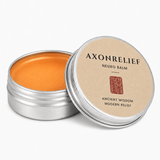
What I found was something completely different — a balm built around a botanical approach to caring for thin, fragile-looking, bruise-prone skin, combining carefully selected botanical extracts with nourishing oils, shea butter and beeswax.
The first thing I’ll say is that it doesn't feel like a "medical" product.
After years of pharmacy creams that smelled like a hospital, after greasy ointments that felt like I was prepping for surgery…
This felt more like a premium skincare product.
The kind of thing you’d find at a high-end beauty counter, but designed with a much more specific purpose in mind.
But what mattered more was the thinking behind it.

Every solution I’d tried before seemed focused on the bruise itself.
Fading it.
Hiding it.
Treating the visible mark after it appeared.
AxonRelief takes a different approach.
Instead of focusing only on the bruise, it’s designed to care for the skin around the problem — especially skin that has become thin, delicate-looking and prone to bruising.
It uses a unique TriActive™ botanical approach that I’d never heard of before.
Ligusticum Chuanxiong Extract is one of the key botanical extracts in the formula, traditionally valued for its circulation-supporting properties.
But that’s just the first part.
Black Pepper Extract adds the second element, bringing a naturally warming botanical sensation to the skin.
And then there’s the nourishing side of the formula.
Safflower Oil, Shea Butter, Jojoba Oil and Beeswax work together to help condition the skin and support its natural moisture barrier.
That whole combination — nobody had ever explained it to me.
I’d spent years thinking I needed something to simply deal with the bruise after it appeared.
But once I understood the approach, it made sense to me.
It wasn’t just about covering a purple mark.
It was about giving my fragile-looking skin a more thoughtful, multi-part approach to daily care.

It arrived on a Tuesday.
I started using it Wednesday morning.
The first thing I noticed was the texture.
It wasn't a heavy, sticky cream.
It was a rich botanical balm that spread easily over my skin without feeling overly greasy.
The second thing was the feeling.
My skin felt nourished and conditioned, rather than simply coated with another layer of cream.
The combination of botanical extracts, nourishing oils, shea butter and beeswax made it feel like I was actually caring for my skin, not just covering up the marks.
My arms were still bruised, of course. You can't expect years of fragile, easily bruised skin to change overnight.
But for the first time in a long time, I felt like I was finally using something that made sense for the kind of skin I actually had.

By the end of the first week, I started noticing a difference in how my skin felt.
It felt softer, more supple and better conditioned.
By week three, I noticed something incredible.
I’d bumped my arm on the car door — a move that usually left behind a purple mark for days.
For once, I didn’t feel like I was constantly fighting my skin.
It just felt... softer, more comfortable, and better cared for.
That was the moment I knew Linda was right.
By the end of the month, the old discoloration from previous bruises had noticeably faded. My arms looked clearer and healthier than they had in years.
I wasn’t just covering up the problem anymore.
I was finally giving my skin the care and nourishment it had been missing.
I’m 68 years old. I don't usually write reviews, and I certainly don't believe in "miracle cures."
But I know how it feels to hide. I know the sting of embarrassment when someone asks, "Oh my goodness, what happened to your arm?"
I know the frustration of spending money on products that treat you like a patient instead of a woman who simply wants to feel comfortable and confident in her own skin.
AxonRelief gave me my summer back.
It gave me my sleeveless dresses back.
It gave me my confidence back.

If you’re tired of the "paper-thin" skin…
If you’re tired of the purple marks and bruises that seem to appear from the smallest bumps…
If you’re tired of hiding under long sleeves in 90-degree heat…
You may have even come across the term senile purpura, which can be associated with easy bruising and purple marks in older, fragile-looking skin.
But whatever the reason behind your skin becoming more delicate, the goal is the same:
Stop simply covering the marks and start giving your skin the care and nourishment it needs.
It isn't the cheapest thing on the shelf, but for the first time, I felt like I was using something that actually made sense for my skin.
And with their 60-day Money-Back Guarantee, I felt comfortable giving it a real try.
I wasn't looking for another quick fix for the purple marks or bruises.
I wanted something that helped me care for the delicate, fragile-looking skin underneath.
I won't lie — I left this page open for days before committing. Here's what I kept going back and forth on...
Many conventional creams focus mainly on the surface, while this formula combines concentrated botanical extracts with nourishing oils and butters to care for the skin from more than one direction.
AxonRelief uses our TriActive Botanical System™, which combines three complementary parts: Ligusticum Chuanxiong Extract as the botanical foundation of the formula, Black Pepper Extract for its naturally warming botanical properties, and a nourishing blend of Safflower Oil, Shea Butter, Jojoba Oil and Beeswax to condition the skin and support its natural moisture barrier.
The goal isn't simply to cover the appearance of the skin — it's to leave it feeling nourished, conditioned and cared for.
Most customers notice a difference in texture and hydration from the very first application — the “tight, papery” feeling eases almost immediately. For existing bruises, dark purple discoloration typically begins to break down and fade within 7 to 10 days of daily use. The deeper benefit — skin that actually resists future bruising — builds over 3 to 4 weeks of consistent use, as the
Safflower Oil, Shea Butter, Jojoba Oil and Beeswax work to restore density to the skin barrier.
AxonRelief is a topical balm applied directly to the skin — it is not an oral supplement and does not enter the bloodstream. It is gentle, fragrance-free, and formulated specifically for sensitive, aging skin. That said, if you have a specific medical concern about an ingredient, we always recommend a quick conversation with your doctor before starting any new skincare product.
It’s true that the underlying structural thinning that comes with age can’t be fully reversed. But “nothing can be done” and “nothing can help” are very different things. Even severely thinned skin responds to the right nutrients. AxonRelief doesn’t promise to turn back the clock — it gives your skin the building blocks it’s been starved of, so existing bruises heal faster and future ones are less likely to form. Many of our customers were told the same thing by their doctors before finding real relief with AxonRelief.
No. This was one of our top priorities when formulating AxonRelief. The cream absorbs within 45 seconds and leaves a clean, non-greasy finish. No residue on your blouses, no staining on your bedsheets, no waiting for it to dry before getting dressed.
Apply a pearl-sized amount to the affected area twice daily — once in the morning, once before bed. Massage gently until fully absorbed. For best results, use consistently every day. The structural benefits (thicker, more resilient skin) build over time with regular use.
Absolutely. While AxonRelief was designed with forearm bruising in mind (the most common area for Senile Purpura), it works equally well on the shins, calves, and backs of the hands — anywhere skin has become thin and prone to bruising. It is gentle enough for daily use on any of these areas.
No. AxonRelief is only available through our official website. Selling exclusively online allows us to maintain the potency of our active ingredients, avoid retail markups, and ship directly from our fulfillment center to your door. It also means you’re always getting a fresh batch — not a product that’s been sitting on a shelf for months.
We stand behind AxonRelief with a 60-Day “Clear Skin or It’s Free” guarantee. If you don’t see your bruises fading faster and your skin feeling stronger within 60 days, simply contact our support team for a full refund. No hoops to jump through, no need to return an empty jar. We take all the risk so you don’t have to.
 +1
+1